- The Factory Shop Open 8:30 - 3pm, Mon - Thurs
- post@droyt.com
- 01257 824167


We Found a Box of Eyes
Some discoveries in a soap factory are more surprising than others.
Tucked away above the factory floor at Progress Mill, we recently uncovered a small cardboard box containing hundreds of tiny handmade eyes.
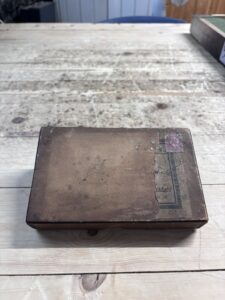
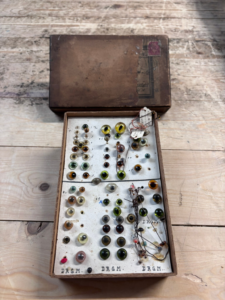
At first glance, it’s a slightly unsettling sight. Open the lid and dozens of eyes stare back at you in every direction. Some are blue, some are brown, some are large and cheerful, while others look positively mischievous.
But these weren’t toys, decorations or oddities collected over the years.
They were an important part of Droyts’ history.
For much of the twentieth century, Droyts produced a range of novelty soaps. Chicks, rabbits, dogs and other character soaps were made by hand, and each needed a pair of eyes to bring it to life. These tiny glass and plastic eyes were carefully selected and inserted into the finished soaps before they left the factory.
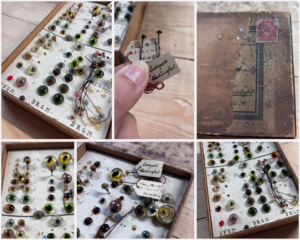
We believe this particular box may have belonged to Mr Danischewsky, whose family founded the business and whose influence can still be seen throughout Progress Mill today. Rather than containing stock for production, the box appears to be a selection case, displaying different sizes, colours and expressions from which suitable eyes could be chosen for future soap designs.
Looking through the box today, it’s easy to imagine it being opened nearly a century ago as new novelty soaps were planned and developed.
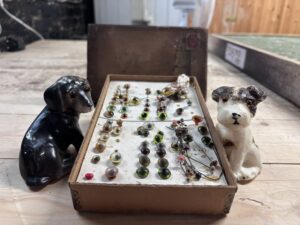
The discovery offers a fascinating glimpse into a different era of soapmaking, when even the smallest details were chosen by hand.
Like many of the objects we uncover around the factory, the box is a reminder that Progress Mill is more than just a working soap factory. It’s also a living archive, filled with the tools, samples and stories of the people who built the business we know today.
And yes, if you’re wondering, opening a box containing hundreds of tiny eyes is every bit as strange as it sounds.
Have you visited our factory shop? Many of the historical objects discovered around Progress Mill can be seen on display, alongside photographs, documents and artefacts from Droyts’ long history.